In a season where every brand is shouting about joy, Marie Curie has gone the other way and made a 90-second film about dying. “The Goodbye We All Deserve” is the first campaign on the UK end of life charity’s new creative platform, made by VCCP Blue, directed by Chris Barrett and Luke Taylor through Academy Films with VCCP’s content studio Girl&Bear, and posted on the official Marie Curie YouTube channel. It is quiet, beautifully lit and brave in its premise, even if it is a little too polite about the problem it exists to solve.
A man walking back through his last year
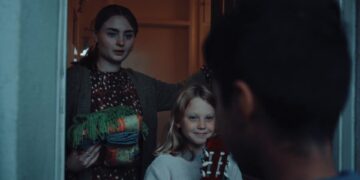
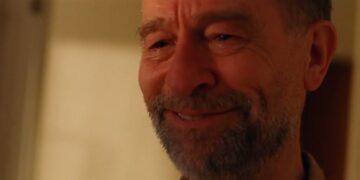
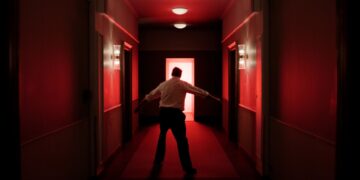
The charity describes the story plainly: Greg has died, and he is looking back over his final year, thanking the people who meant the most to him. The film opens in a dim hallway, then drifts into an ordinary British home. Greg, played by Grant Masters, lingers in a kitchen doorway while an older couple sit at a small round table. A mug is passed across, faces break into smiles, the light is soft and late. A grey-haired woman smiles at him in a garden, a man sits on a bench in front of a brick semi, a girl with curly hair spins through a room, sunlight lands on an empty staircase.
Then the Marie Curie Nurse arrives, without fanfare. She sits at a bedside holding a woman’s hands, she waits in a hallway, she is just another person in the house. A woman lies on a pillow smiling back at Greg, and the camera keeps returning to his face, wet-eyed and grateful, in that amber light. As each of the campaign’s films closes, Greg thanks Marie Curie for supporting him and his family and for helping him feel like himself, right to the end. The end card is a house at night with the line “End of life care for every life.”
What works: the nurse is not the hero
The smartest decision is structural. Charity ads about terminal illness usually put the professional in the spotlight, the angel in uniform who saves the day. Here the nurse is one face among the family and friends Greg thanks, and that is exactly the point the charity wants to make: good end of life care should feel like part of home, not an invasion of it. It fits Marie Curie’s stated strategy of moving more care into communities and people’s homes, and it makes the brand role feel earned rather than bolted on.
The directing is the other big asset. Barrett and Taylor, with DP Patrick Meller, shoot everything in close, shallow, golden frames that feel like memory rather than flashback. Nothing is dramatised. Nobody coughs, nobody collapses, there are no hospital corridors. Billy Mead’s edit at tenthree lets shots breathe, and Stein Austrud’s “Breath”, recomposed to picture, keeps the mood tender without tipping into syrup. Masters gives a lovely, unshowy performance: a man who is grateful rather than tragic.
What does not: the gap is invisible
The weakness is that the film only shows the good version. The charity’s own case is urgent: it says almost one in three people who die in the UK do not get the end of life care and support they need, around 200,000 people a year, and the number is rising. None of that tension is on screen. We see the goodbye everyone deserves, but never the goodbye too many people actually get, so the ask for monthly giving has to rely on the YouTube description and the media plan to land the urgency.
The middle section also blurs. Without names or captions, the kitchen couple, the woman in the garden, the man on the bench and the girl are hard to place in Greg’s life, and the montage starts to feel like a mood reel of warm British interiors. The posthumous narrator is a powerful device, but it is not a new one, and the film plays it very safe. A single sharper, specific memory would have done more than several soft ones.
Why it still matters
Still, this is a rare piece of charity advertising that trusts the audience with a hard subject and does not punish them for watching. It reframes end of life care as dignity, company and feeling like yourself, which is a far more hopeful sell than fear. The platform also runs across radio, podcasts and social, where real people share voice notes about how Marie Curie helped someone they loved, and that real testimony is the perfect complement to this polished fiction.
Verdict
“The Goodbye We All Deserve” is gentle, gorgeously shot and smartly built around the idea that the nurse belongs in the family picture. It is held back by a montage that blurs and by the absence of the very problem it is asking you to fund. A moving start for a new platform, but the next films need more bite.
Rating: 3.5 out of 5
Credits (from Creative Salon, LBB and shots): Client: Marie Curie. Agency: VCCP Blue. ECD: Mark Orbine. Deputy ECD: Ciara O’Meara. CD: Colin McKean. Creatives: Ben Parmenter, Keilan Grant. Content creation studio: Girl&Bear. Production: Academy Films. Directors: Chris Barrett and Luke Taylor. EP: Simon Cooper. Producer: Tex Travi. DOP: Patrick Meller. Editor: Billy Mead at tenthree. Post: Black Kite, colourist Tom Mangham. Audio: 750mph, sound engineer Matt Valentine. Music: “Breath” by Stein Austrud, music supervision Raife Burchell at Dirty Soup. Cast: Grant Masters, Marina Fallahi, Abigail Moss, Helena Little, Freya Duffy Allain, Tony Chapman, Michael D’Cruze, David Wainwright. Brand VO: Witney White. Media: Medialab.