Artlist’s 2026 Super Bowl Ad: AI-Powered Parody or a Challenge to the Advertising Establishment?
Most Big Game commercials are expensive, carefully staged productions featuring celebrities, sweeping narratives, and massive budgets. So when Artlist — the creative suite and AI-enabled video platform — dropped its official Super Bowl LX ad, it wasn’t just another entry in the crowded slate. It was a provocation: a commercial that parodies the rest of the commercials while celebrating a new era of democratized creativity
Unlike the football-night spots from Bud Light, Lay’s, or Alexa+, Artlist’s ad has a meta-creative mission. Conceived, produced, and finished in under five days, it was created almost entirely in-house using Artlist’s AI Toolkit, and at a fraction of the cost one might expect for a Big Game spot. The company openly touted that it made three Big Game-ready ads for just a few thousand dollars and with a tiny production timeline — a symbolic contrast to the six-month, multi-million-dollar campaigns typical of the event.
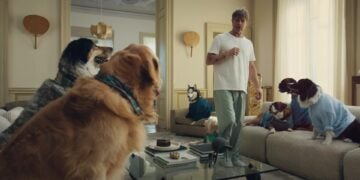
The spot itself plays like a remix and affectionate roast of the very ads it satirizes: visual callbacks to Pepsi’s polar bear moment, Bud Light’s wedding antics, Instacart’s Europop quirk, and Fanatics’ cultural commentary all get reimagined through Artlist’s generative tools. In essence, it’s a Big Game highlights reel made with AI, riffing on the creative languages of the 2026 lineup.

A Creative Argument Wrapped in Self-Parody
To understand the force behind this campaign, you need to know what Artlist is really selling: accessibility in content creation. In a world where Super Bowl commercials are usually the domain of a handful of elite agencies, Artlist wants to prove that anyone with its tools can produce work that looks and feels like Big Game advertising. It’s less about showing features and more about showing possibility — a powerful repositioning in a year where AI is everywhere in the advertising conversation.
And this isn’t subtle. The ad intentionally nods to its sources, implicitly asking:
If these iconic ads can be parodied and remixed in a matter of days, do we still need six-month, million-dollar workflows?
That’s a direct challenge to the industry’s lockstep approach to Big Game ad production.
Humor Versus Clarity: Where This Spot Thrives — and Where It Stumbles
Creatively, Artlist’s ad scored points for wit, speed, and cultural awareness. In a year defined by AI — from Anthropic’s AI-debate ad to Amazon’s Alexa+ narrative about machine consciousness — Artlist’s campaign fits right into the meta conversation about how AI is shaping storytelling itself. It isn’t just about AI tools; it’s *made by them, and it wants audiences to think about that distinction.
But that’s also where the critique gets real. While the ad generated buzz in advertising circles, its parody of other commercials may have been too insider for casual viewers. Big Game audiences don’t always have the context of Bud Light’s wedding gags or Instacart’s Europop flair memorized, and without that frame of reference, the joke risks feeling like a clip reel rather than a brand message. An ad that depends on parody inherently runs the risk of feeling like commentary instead of persuasion — especially when the product message itself isn’t front and center.
Moreover, running the spot regionally in markets like New York and Los Angeles — rather than nationwide during the broadcast itself — amplified that tension. The campaign’s strength is its strategic argument about creative democratization, not its broadcast reach. That’s an interesting hedge: Artlist is more concerned with being talked about online and within the industry than with dominating the national primetime feed.
What This Campaign Signals About Advertising, AI, and Access
Artlist’s Big Game ad occupies a unique position on the 2026 slate. It’s not there to win laughs, tug at heartstrings, or anchor a product feature with celebrity endorsement. Instead, it is advertising about advertising — using the medium itself to question who gets to make these ads and how. That’s a bracing move in an industry still grappling with the transition from traditional production processes to AI-augmented workflows.
In this way, the commercial isn’t just an ad; it’s a statement: the creative playground has changed. What used to demand months of prep and millions in budget can now be reimagined in mere days with accessible tools. For creators, that’s exciting; for agencies, it’s a reminder that disruption often comes from the edges.
Final Verdict: Provocative, Polarizing, and a Little Avant-Garde
Artlist’s Superman debut wasn’t meant to be the most watched or the most heartwarming. It was meant to stir conversation — about AI, about creativity, and about the barriers to entry in modern advertising. In that sense, it succeeded: the campaign made it onto early “most unforgettable ads of 2026” lists not because of cinematic mastery, but because it made people think about advertising itself.
Yet the very quality that makes it interesting — its clever parody approach — may also limit its mass appeal. Casual watchers might enjoy the humor or the speed at which it was made, but without a strong product tie-in, the commercial risks being remembered more for its concept than its call to action. That’s a bold gamble in an arena where clarity often wins over cleverness.
In an era when AI is no longer just a buzzword but the engine of creativity itself, Artlist’s ad stands as one of the most revealing Big Game entries of 2026 — a commercial that isn’t just selling a tool, but selling an argument about why tools like this matter.